Cast Iron vs Carbon Steel
Quick answer
Buy the Lodge Pre-Seasoned Cast Iron Skillet ($24.90) for heat retention on steaks and cornbread; buy the OXO Obsidian Carbon Steel Pan ($57.91) if a lighter, faster-responding pan for everyday sauteing and omelets matters more than raw heat retention.

Lodge Pre-Seasoned Cast Iron Skillet, PFAS-Free, 10.25 Inches
10.25 inSteaks, cornbread, and any dish that benefits from a pan that holds heat steady once it gets hot, including finishing in the oven.
| Cast Iron | Carbon Steel | |
|---|---|---|
| Metal | Iron alloy, same family as carbon steel | Steel, much thinner casting |
| Thermal conductivity | About 52 W/m-K | Similar per unit thickness, but thinner overall |
| Heat capacity | High, holds temperature well | Lower, responds faster to changes |
| Weight, 10-inch pan | Heavier | Noticeably lighter |
| Heat-up speed | Slower | Faster |
| Induction compatible | Yes, ferromagnetic | Yes, ferromagnetic |
| Seasoning required | Yes | Yes |
| Price | $24.90 | $57.91 |
Same metal family, very different feel
Cast iron and carbon steel are both unlined, seasoned cookware made from iron-based metal, which is why they share so many properties: both need seasoning to build a natural nonstick layer, both are ferromagnetic so both work on induction cooktops, and both can go from stovetop to oven without worrying about a coating breaking down.
The difference comes down to how each is manufactured. Cast iron is poured into a mold and cools as a thick, dense piece of metal, roughly 52 W/m-K in thermal conductivity but with high heat capacity, meaning it takes a lot of energy to heat up and then holds that heat stubbornly once it gets there. Carbon steel is spun or stamped from thin sheet metal, so it is much lighter and heats up and cools down far faster despite being a similar metal alloy underneath.
Heat retention versus fast response
Cast iron's thickness gives it high thermal mass, which is what lets it stay hot when cold food, like a thick steak straight from the refrigerator, hits the pan. That stored heat keeps the pan from dropping too far in temperature at the exact moment a good sear depends on staying hot, which is why cast iron is such a reliable choice for steaks, chops, and cornbread that needs a hot pan to form a crust on contact. The same thermal mass is a downside when speed matters, since cast iron takes noticeably longer to preheat than a thinner pan and does not cool down quickly even after the burner is turned off.
Carbon steel pans, like the OXO Obsidian, are much thinner than cast iron while made from a closely related metal. That thinness means less total metal to heat up, so the pan reaches cooking temperature faster and also cools down faster once removed from the burner, giving a cook more real-time control during frequent heat adjustments, like sauteing vegetables that need to move quickly without burning, or gentle omelet cooking.
Seasoning and maintenance for both
Both cast iron and carbon steel rely on seasoning, a layer of polymerized oil baked onto the metal surface through repeated heating, to create a natural nonstick surface and to protect the bare metal from rust. Neither pan should go in the dishwasher, and both should be dried thoroughly and lightly oiled after washing to prevent rust from forming on the exposed metal.
Carbon steel typically seasons a bit faster than cast iron because its smoother factory finish holds a thinner, more even oil layer, while cast iron's slightly rougher surface can take a few more seasoning cycles to build an even coating. Both improve steadily with regular cooking, especially with fatty foods.
A dull, matte gray look after washing is normal for both metals and does not mean the seasoning has failed; it usually just means a thin layer of oil needs to be rubbed in and briefly heated before the pan goes back into the cabinet. Flaking, sticky residue, or a rough patchy texture, on the other hand, usually points to too much oil applied at once during a seasoning session rather than a problem with the pan itself.
Weight, handling and induction compatibility
A 10-inch cast iron skillet is noticeably heavier than a comparable carbon steel pan, which affects everything from lifting it off the stove to flipping food with a wrist motion instead of a spatula. That weight is part of why cast iron holds heat so well, but it also makes one-handed pan tricks and quick tilting harder, especially for anyone with wrist or shoulder strain. Carbon steel's lighter weight makes it easier to toss food, tilt the pan for an omelet fold, or maneuver quickly during a stir-fry style cook.
Both metals are ferromagnetic, meaning both cast iron and carbon steel work on induction cooktops without needing any special adapter or disc, unlike stainless or aluminum cookware, which needs a magnetic base layer specifically added to work on induction.
Price, handles, and how each pan behaves near the burner
Cast iron is generally the cheaper of the two at entry level, since it is poured in a single mold and requires less finishing work than carbon steel, which is often spun or stamped and then ground smooth before it ships. The Lodge 10.25-inch skillet at $24.90 reflects that lower manufacturing complexity and comes pre-seasoned, saving the initial seasoning process most bare carbon steel pans require. Carbon steel pans, like the OXO Obsidian at $57.91, generally cost more per pan, reflecting the additional forming and finishing work.
Most cast iron skillets, including the Lodge, use a cast iron handle as part of the single piece of poured metal, which means the handle heats up along with the rest of the pan and will need a towel or handle cover during and after cooking. Carbon steel pans often use a similar all-metal handle design, sometimes welded or riveted rather than cast as one piece, and it will also get hot during cooking, so the same precaution applies to both pan types near an active burner or in the oven.
High-heat searing, stovetop-to-oven use, and pan shape
Neither cast iron nor carbon steel has a coating to protect, so both tolerate very high stovetop heat and a direct trip into a hot oven better than most nonstick or enameled cookware, which is why both remain the go-to choice for recipes that start with a stovetop sear and finish roasting in the oven, like a thick pork chop or a whole cast iron cornbread. The main limiting factor for either pan in the oven is the handle, since an all-metal handle can go to essentially any home oven temperature, while a pan with a plastic or silicone-wrapped handle should not.
Cast iron skillets, including the Lodge 10.25-inch pan, typically have straighter, slightly steeper sides and a heavier flat base, a shape well suited to searing and holding food in place for a long, undisturbed browning stage. Carbon steel pans, like the OXO Obsidian, more often use a gently sloped, rounded sidewall design borrowed from traditional French and Asian pan shapes, which makes tossing and sliding food around the pan easier during active sauteing or stir-fry style cooking.
Neither shape is required for either metal; some carbon steel pans use steeper skillet-style sides similar to cast iron, and some cast iron pans, particularly smaller ones, adopt a gentler slope. When shopping, it is worth checking the specific sidewall angle in product photos rather than assuming shape based on metal type alone, since manufacturers vary this detail across their product lines.
Which one to buy first
For a first unlined skillet, cast iron is the more forgiving and lower-cost choice. The Lodge 10.25-inch skillet at $24.90 is inexpensive enough to be a low-risk purchase, comes pre-seasoned out of the box, and handles steaks, cornbread, and one-pan meals well. Add a carbon steel pan like the OXO Obsidian at $57.91 later for lighter daily cooking, sauteing, and dishes where quick heat adjustments matter more than raw heat retention.
Carbon Steel (OXO Obsidian 10")
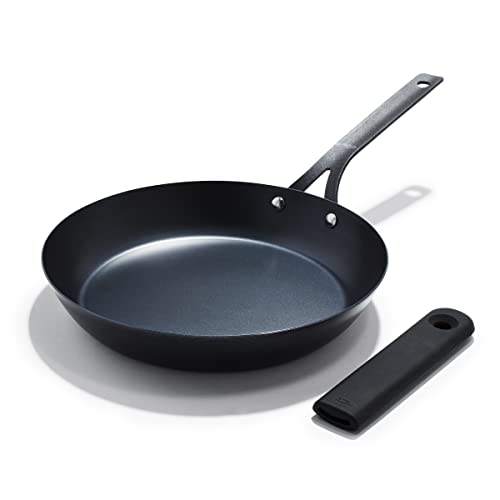
OXO Obsidian 10" Carbon Steel Frying Pan, Pre-Seasoned Skillet
10 inSauteing, omelets, and stir-fry style cooking where a lighter pan that heats and cools quickly makes daily handling easier.
Both sides of this comparison
- Merten & Storck
Merten & Storck 8" Pre-Seasoned Carbon Steel Frying Pan Skillet
8 in$29.99 Check pricePrices change often


Common questions
Is carbon steel better than cast iron?
Neither is strictly better; they suit different cooking styles. Cast iron holds heat longer, which favors steaks and cornbread, while carbon steel is lighter and responds faster to heat changes, which favors sauteing and omelets. Many cooks eventually own both rather than choosing one over the other permanently.
Why does my carbon steel pan heat up faster than cast iron?
Carbon steel pans are made from much thinner metal than cast iron, so there is less total mass to heat, letting the pan reach temperature faster. Cast iron's thickness gives it high heat capacity, which is an advantage for holding steady heat but a disadvantage for quick preheating.
Do cast iron and carbon steel both work on induction?
Yes. Both metals are ferromagnetic, meaning an induction cooktop can generate heat in them directly without any adapter disc, unlike some aluminum or copper cookware that needs a magnetic layer added specifically for induction compatibility.
Do I need to season a carbon steel pan the same way as cast iron?
Yes, both need a seasoning layer of polymerized oil to build natural nonstick properties and protect against rust. Carbon steel often seasons a bit faster because its factory finish is smoother than cast iron's, but the process, heating a thin layer of oil until it polymerizes onto the metal, is essentially the same for both.
Which pan is easier for a beginner to maintain?
Cast iron is generally more forgiving for beginners because its thicker build tolerates minor lapses in care, like a bit of standing water, better than carbon steel's thinner metal, which can flash rust faster if left wet. Both require hand washing, thorough drying, and a light oil coating after use.
Can I use cast iron or carbon steel for acidic sauces?
Both can lose seasoning when acidic ingredients, like tomato sauce or wine, sit in the pan for extended cooking times, since acid slowly breaks down the polymerized oil layer. Quick acidic deglazing is generally fine on well-seasoned pans, but long acidic braises are better suited to enameled cast iron or stainless steel, which have no seasoning to strip.