Best carbon steel skillets
Quick answer
The OXO Obsidian 10 Inch Carbon Steel Frying Pan ($57.91) is the best carbon steel skillet for most cooks: it arrives pre-seasoned, is noticeably lighter than a comparable cast iron skillet, and heats up faster because carbon steel is thinner while still being made from essentially the same iron and carbon alloy.
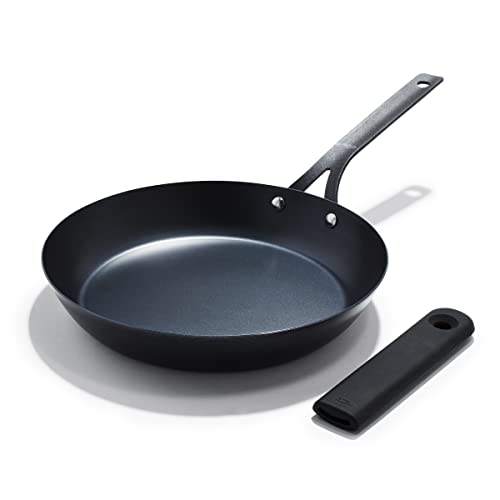
OXO Obsidian 10" Carbon Steel Frying Pan, Pre-Seasoned Skillet
10 inThis OXO Obsidian pan arrives pre-seasoned, so there is no lengthy initial seasoning process before the first use. Carbon steel is chemically similar to cast iron, mostly iron with a small percentage of carbon, but it is manufactured thinner, which makes it meaningfully lighter to lift and maneuver while still building the same kind of polymerized seasoning layer over repeated use. At 10 inches, it is sized for searing a single protein or two eggs with room to spare.
The three tiers
Beginner: Best first skillet
someone curious about carbon steel who wants a small, low-cost pan to learn the seasoning routine- Beginner pick
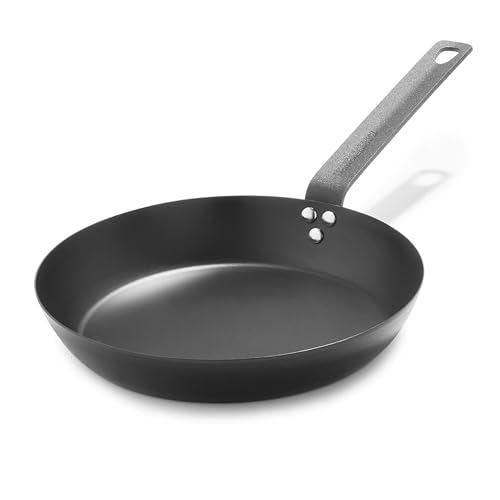
Merten & Storck 8" Pre-Seasoned Carbon Steel Frying Pan Skillet
8 in$29.99 Check pricePrices change often

The Merten & Storck 8 Inch Pre-Seasoned Carbon Steel Frying Pan costs $29.99 and arrives pre-seasoned, so it is cookable immediately. Its 8 inch size, smaller than most main skillet purchases, makes it an approachable size for a single egg dish, a small sauce, or practicing the heat control and drying routine that carbon steel and cast iron both require, without committing to a larger pan before knowing whether the material suits your cooking style.
Not for: Anyone who wants to sear a full-size steak or cook for more than one person at a time. An 8 inch pan has a flat cooking surface of roughly 6 inches, too small for most main-course searing tasks.
Intermediate: Best value
a cook who wants a main-size carbon steel skillet for everyday searing and sauteing- Intermediate pick
OXO Obsidian 10" Carbon Steel Frying Pan, Pre-Seasoned Skillet
10 in$57.91 Check pricePrices change often
The OXO Obsidian 10 Inch Carbon Steel Frying Pan at $57.91 is pre-seasoned and sized for the most common cooking tasks, roughly an 8 inch flat cooking surface once the rim diameter is accounted for. Carbon steel at this size heats up faster than a comparable cast iron skillet because the metal is thinner, while still retaining enough mass to hold a strong sear once hot, making it a practical daily-use pan for searing meat, sauteing vegetables, or making a pan sauce.
Not for: A cook who wants the absolute highest heat retention for a long, slow sear, such as a thick bone-in steak. Cast iron's greater mass holds heat through a longer cook better than the thinner carbon steel construction, even though carbon steel heats up faster at the start.
Expert: Performance ceiling
a cook who uses a carbon steel pan daily and wants a companion tool built specifically to maintain the seasoning layer
The OXO Obsidian 10 Inch Carbon Steel Frying Pan with Iron Cleaning Brush, at $69.99, is the same pre-seasoned 10 inch pan as the Intermediate pick, bundled with a brush purpose-built for cleaning carbon steel and cast iron without stripping the seasoning layer the way a standard scouring pad can. For a cook using this pan multiple times a week, the dedicated brush protects the seasoning investment being built up through daily use, which matters more the more frequently the pan sees the stove.
Not for: Someone who only plans to use a carbon steel pan occasionally. The bundled brush adds a real cost premium over the pan alone, and an infrequent user's seasoning layer builds slowly enough that a standard soft brush or nylon scrubber is adequate.
| Product | Price | Diameter | Seasoning |
|---|---|---|---|
| Merten & Storck 8-Inch Skillet | $29.99 | 8 inches | Pre-seasoned |
| OXO Obsidian 10-Inch Skillet | $57.91 | 10 inches | Pre-seasoned |
| OXO Obsidian 10-Inch Skillet with Cleaning Brush | $69.99 | 10 inches | Pre-seasoned, bundled with iron cleaning brush |
Why choose carbon steel over cast iron?
The single biggest reason cooks switch to carbon steel is weight. Because carbon steel is manufactured as a thinner sheet rather than cast in a thick mold, a 10 inch carbon steel pan is meaningfully lighter than a similarly sized cast iron skillet, which makes lifting, tilting and tossing food noticeably easier, especially for anyone with wrist strain or grip limitations.
The lighter mass also means carbon steel heats up faster than cast iron, which suits cooks who want more responsive heat adjustment, closer to how a stainless or aluminum pan behaves, while still gaining the seasoned, naturally nonstick surface that only cast iron and carbon steel develop over time.
Does carbon steel hold heat as well as cast iron for a long sear?
Not quite. Cast iron's thicker construction gives it more thermal mass, meaning it resists cooling down when cold food is added and holds a stable searing temperature through a longer cook, such as a thick steak finished over several minutes per side. Carbon steel's thinner construction heats up faster initially but can cool more noticeably when a large quantity of cold food is added at once, which is worth considering for high-volume searing.
For quick sears, sauteing, stir-frying and everyday cooking, this difference rarely matters in practice, and carbon steel's faster response to heat adjustments is often preferred for those tasks over cast iron's slower, steadier behavior.
How do you season a carbon steel pan for the first time?
Even a pre-seasoned carbon steel pan benefits from an at-home seasoning pass before regular use: coat the pan lightly with a high smoke point oil, wipe away any excess so no pooling remains, and heat it on the stovetop or in the oven until the oil polymerizes into a matte, slightly darkened coating. Repeating this two or three times before regular cooking begins builds a more durable base layer than relying on the factory pre-seasoning alone.
- Step 1: apply a thin, even coat of high smoke point oil
- Step 2: wipe off all visible excess oil
- Step 3: heat until the surface darkens and the oil polymerizes
- Step 4: repeat two to three times before daily use begins
Is carbon steel induction compatible?
Yes. Carbon steel is naturally magnetic, the same as cast iron, so it works on induction cooktops without any special base treatment or added layer, unlike pure aluminum or copper cookware, which requires an added magnetic layer to work on induction at all.
This magnetic property also means carbon steel heats up faster on induction specifically than it does on gas or electric coil, since induction transfers energy directly into the magnetic pan rather than heating an element that then heats the pan, which suits carbon steel's already faster heat-up time compared to cast iron.
What is the most common complaint about carbon steel pans?
Owner reports most commonly mention warping if the pan is exposed to a sudden extreme temperature change, such as running cold water over a very hot pan immediately after cooking. Allowing the pan to cool for a few minutes before washing, the same practice recommended for cast iron, avoids this issue in nearly all cases and is a small habit change rather than a limitation of the material itself.
How does carbon steel compare to stainless steel for everyday cooking?
Stainless and clad stainless skillets do not require seasoning or the same rust vigilance carbon steel demands, which makes them lower maintenance overall, but they also do not develop the natural nonstick surface carbon steel builds over time with use. Carbon steel rewards a cook willing to maintain a seasoning layer with better food release for searing and sauteing without a manufactured coating, while stainless is the more forgiving choice for someone who wants to skip seasoning entirely and accept slightly more sticking on delicate foods until technique improves.
Cost is also a meaningful difference at the entry level: a basic carbon steel pan and a basic tri-ply stainless pan of similar size are often priced within a few dollars of each other, so the decision usually comes down to whether the buyer is willing to take on seasoning maintenance in exchange for a naturally building nonstick surface, rather than one material being a clearly better value than the other.
How we chose
This page is researched from published manufacturer specifications, including weight, diameter and pre-seasoned status, compared against owner reports describing how carbon steel behaves in daily use relative to cast iron. No in-person cooking or lab testing of these pans informed this page.
We treated weight as a primary differentiator from our cast iron recommendations specifically, since the main reason a cook chooses carbon steel over cast iron is usually the lighter weight and faster heat-up time, not a difference in searing capability once the pan is hot.
Buying tips
What is actually different between carbon steel and cast iron?
Both are made primarily of iron with a small percentage of carbon, and both build a seasoning layer through the same process of baked-on polymerized oil. The practical difference is manufacturing: carbon steel is typically spun or pressed into a thinner pan, while cast iron is poured into a mold at a thicker gauge. That thinness makes carbon steel noticeably lighter and faster to heat, while cast iron's extra mass holds heat longer once it gets there. Carbon steel is also generally more resistant to cracking from an accidental drop than cast iron, since a thinner, more flexible sheet of steel tolerates impact differently than a rigid, brittle cast piece.
Does carbon steel need the same seasoning care as cast iron?
Yes, essentially identically. Carbon steel builds a seasoning layer the same way cast iron does, through repeated cooking with fat followed by thorough drying and a light oil coat, and it is vulnerable to the same rust risk if left wet. The seasoning routine that works for a cast iron skillet transfers directly to a carbon steel pan, including drying it thoroughly, ideally over a warm burner for a minute, before it ever goes back into a cabinet.
Is carbon steel a good choice for someone who found cast iron too heavy?
Yes, this is one of the most common reasons cooks switch to carbon steel. A 10 inch carbon steel pan is noticeably lighter than a 10.25 inch cast iron skillet of similar cooking capacity, which makes techniques that involve lifting and tilting the pan, like tossing vegetables or making an omelet, meaningfully easier without giving up the ability to build a durable seasoned surface.
What size carbon steel pan should you buy first?
A 10 inch pan is the most versatile starting size, since its roughly 8 inch flat cooking surface handles single servings and small batches of vegetables comfortably while still being light enough to lift and tilt one-handed for tossing. An 8 inch pan, like the Merten & Storck model, is a reasonable choice specifically for someone who wants to try the material on a smaller, cheaper pan before committing to a larger main-cooking size.
Can carbon steel replace a nonstick pan for eggs?
A well-seasoned carbon steel pan can cook eggs with minimal sticking, but it requires more attention to preheating and oil quantity than a fresh nonstick pan does, and a brand-new or under-seasoned carbon steel pan will stick noticeably more than an established one. Cooks who prioritize consistent, low-effort egg release above all else may still prefer dedicated nonstick for that specific task.
Do you need a special utensil for carbon steel like you do for nonstick?
Metal utensils are generally fine on carbon steel, unlike on nonstick coatings, since the seasoning layer is a polymerized oil bonded to bare metal rather than a separate manufactured coating, and light scraping does not remove it the way a scratch removes a PTFE coating. That said, aggressive scraping with sharp metal edges can still thin the seasoning layer over time, so a metal spatula for flipping is fine while an aggressive metal scouring pad for cleaning is best avoided.
Other options worth knowing about
- Merten & Storck
Merten & Storck 10" Pre-Seasoned Carbon Steel Frying Pan Skillet
10 in$49.99 Check pricePrices change often - Merten & Storck
Merten & Storck 12" Pre-Seasoned Carbon Steel Frying Pan Skillet
12 in$59.95 Check pricePrices change often

Common questions
What is the best carbon steel skillet overall?
The OXO Obsidian 10 Inch Carbon Steel Frying Pan at $57.91 is the best overall pick. It arrives pre-seasoned, is sized for most everyday searing and sauteing tasks, and is noticeably lighter to handle than a comparably sized cast iron skillet.
Is carbon steel better than cast iron for searing?
Cast iron generally holds a slightly steadier temperature through a long sear because of its greater thermal mass, but carbon steel heats up faster and is significantly lighter, which many cooks find outweighs cast iron's small heat-retention edge for everyday cooking.
Do you need to season a carbon steel pan the same way as cast iron?
Yes. Carbon steel and cast iron are chemically similar, both mostly iron with a small amount of carbon, and both build a nonstick seasoning layer the same way, through repeated cooking with fat, thorough drying, and periodic light oiling. The care routine transfers directly between the two materials.
Why is my carbon steel pan sticking even though it is pre-seasoned?
Factory pre-seasoning is a thin starter layer, not a fully built seasoning coat. A carbon steel pan typically needs several more cooking sessions, ideally with an at-home seasoning pass first, before it develops the smoother, more effective nonstick surface that comes with regular use over time.
Can carbon steel pans go in the oven?
Yes, carbon steel pans are generally oven safe to very high temperatures because they are solid metal with no coating to break down, though any plastic or rubberized handle components should be checked against the specific product listing before using it under a broiler.
Is the bundled cleaning brush worth paying extra for?
It is worth it for a cook who uses a carbon steel pan several times a week, since a purpose-built iron cleaning brush removes stuck food without stripping the seasoning layer the way a standard scouring pad can. For occasional use, a soft nylon brush already on hand is an adequate substitute.