Cookware materials explained
Quick answer
Cookware material determines how fast heat spreads and how well it holds temperature: copper (about 401 W/m-K) and aluminum (about 237 W/m-K) heat fastest and most evenly, while cast iron (about 52 W/m-K) and stainless steel (about 16 W/m-K) heat slower but cast iron holds far more heat once it gets there.
Thermal conductivity and density figures are published material properties, not brand claims.
| Material | Conductivity | Density | Induction |
|---|---|---|---|
| Copper | About 401 W/m-K | About 8.96 g/cm3 | No (bare) |
| Aluminum | About 237 W/m-K | About 2.70 g/cm3 | No (bare) |
| Cast iron | About 52 W/m-K | About 7.2 g/cm3 | Yes |
| Carbon steel | About 50 W/m-K | Close to cast iron | Yes |
| Stainless steel | About 16 W/m-K | Lower than iron | Only with magnetic base |
| Stoneware | About 1.5 W/m-K | Varies | No |
| Glass | About 1.0 W/m-K | Varies | No |

What actually determines how a pan cooks
Cookware material is the metal or ceramic the cooking surface and body are made from, and it sets three things at once: how fast heat spreads across the pan, how much heat the pan can store, and whether the pan works on an induction hob at all. Two pans that look identical can behave completely differently in a hot skillet because one is stamped aluminum and the other is cast iron.
Conductivity and heat capacity are not the same property, and mixing them up is the most common mistake in choosing cookware. Conductivity is how quickly heat moves through the metal from the burner to the food. Heat capacity is how much energy the metal can store before its temperature rises. A material can be a poor conductor and still be a great cooking surface if it has enough mass and heat capacity, which is exactly the cast iron case.
Why copper and aluminum heat so evenly
Copper conducts heat at roughly 401 W/m-K and aluminum at roughly 237 W/m-K, both far ahead of stainless steel at roughly 16 W/m-K. That gap is why a copper or aluminum-core pan shows almost no hot spot directly over the burner: heat entering at one point spreads sideways through the metal almost as fast as it moves upward into the food. Pure aluminum is soft, reactive with acidic food, and awkward to bond to a nonstick coating on its own, so most aluminum cookware is anodized, clad with stainless, or used as the core of a multi-ply construction rather than sold bare.
Copper cookware is usually lined with stainless or tin because raw copper can react with food and is not considered food-safe for direct contact with acidic ingredients over time. The high price of copper is also why most home cookware uses aluminum as the conductive layer instead: it delivers most of the evenness at a fraction of the material cost.
Why cast iron behaves like a heat battery
Cast iron conducts heat at roughly 52 W/m-K, about a fifth of aluminum, so a burner directly under a cast iron pan creates a real hot spot if you check with a thermometer. What cast iron has instead is mass and heat capacity: with a density around 7.2 g/cm3 and the specific heat of iron near 460 J/kg-K, a cast iron skillet stores a large reserve of heat energy relative to its conductivity. That reserve is what makes a hard sear possible. When cold food lands on the surface, the pan's stored heat keeps the contact point hot enough to brown instead of steam, which is the entire mechanism behind a crust.
Carbon steel sits close to cast iron thermally, at roughly 50 W/m-K, but it is thinner and lighter, so it heats up and cools down faster while still taking a seasoned patina the same way cast iron does.
How stainless steel is actually built
Stainless steel alone conducts poorly at roughly 16 W/m-K, which is why bare stainless pans are almost never sold: they would scorch food directly over the burner while the edges stayed cool. Manufacturers solve this by cladding stainless around a core of aluminum or copper (tri-ply or five-ply construction) so the conductive core does the spreading and the stainless layer provides the durable, non-reactive cooking surface. A cheaper approach uses a conductive disc welded only to the base rather than running up the pan's sides, which spreads heat well on the bottom but leaves the side walls thin and less even.
The grade of stainless matters for magnets, not for cooking performance. Austenitic 18/10 stainless (grade 304), the type most cookware surfaces use for its corrosion resistance and shine, is not magnetic. A magnetic stainless exterior on an induction-ready pan comes from a separate ferritic layer such as 430 stainless bonded to the base, not from the 304 surface itself.
Where nonstick and ceramic coatings fit in
Nonstick and ceramic coatings are surface treatments applied over an aluminum or stainless body, not structural materials in their own right, so their thermal behavior mostly follows whatever metal sits underneath. What differs is the oven ceiling and the surface chemistry: PTFE nonstick coatings are generally rated for lower ceiling temperatures than bare metal, and ceramic sol-gel coatings carry their own separate ceiling that is usually lower still. Neither coating is meant for the aggressive high-heat searing that bare stainless, cast iron or carbon steel can take.
Glass and stoneware bakeware sit at the opposite end of the conductivity scale from metal, at roughly 1.0 W/m-K for glass and roughly 1.5 W/m-K for stoneware. Both heat and cool slowly and evenly, which suits baking, but both are vulnerable to thermal shock: moving a hot glass or stoneware dish onto a cold or wet surface can crack it.
Matching material to the way you actually cook
A stainless clad set covers most everyday cooking: sauces, sautes, boiling and searing, with even heat and no seasoning to maintain. Cast iron and carbon steel earn their place for high-heat searing, oven-to-table dishes and situations where a durable, re-seasonable surface matters more than fast heat-up. Nonstick and ceramic pans handle eggs, fish and delicate foods where release matters more than crust, in exchange for a shorter working life and a lower heat ceiling.
- Fastest, most even heating: copper, then aluminum-core clad stainless
- Best heat retention for searing: cast iron, then carbon steel
- Easiest release for delicate food: PTFE or ceramic nonstick
- Most durable everyday surface: clad stainless steel
How material affects induction compatibility
Induction hobs heat cookware by inducing electrical currents directly in a magnetic base, so the pan's material has to be ferromagnetic for the hob to work at all. Cast iron, carbon steel and any stainless pan with a magnetic ferritic layer in its base all work. Pure aluminum, copper and glass or stoneware do not respond to induction on their own because none of them are magnetic, regardless of how well they conduct heat.
Gear for this job
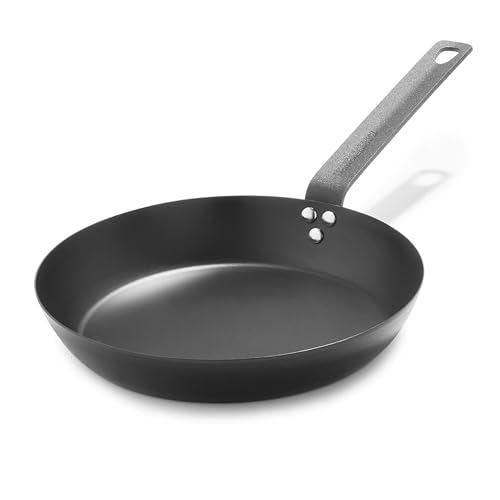
- Merten & Storck
Merten & Storck 10" Pre-Seasoned Carbon Steel Frying Pan Skillet
10 in$49.99 Check pricePrices change often - Cuisinart
Cuisinart Stainless Steel Pots and Pans Set, Induction Compatible, 12 pc
12 pieces$219.95 Check pricePrices change often - All-Clad
All-Clad D3 Stainless Steel Cookware Set, 5-Piece, Made in the USA
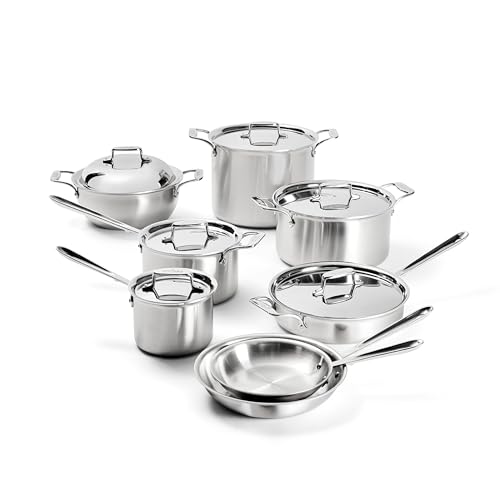
5 pieces$399.99 Check pricePrices change often - All-Clad
All-Clad D5 Stainless Steel 14-Piece Cooking Set, Made in the USA
14 pieces$1,499.95 Check pricePrices change often



Common questions
What is the most conductive cookware material?
Copper is the most conductive common cookware material at roughly 401 W/m-K, followed by aluminum at roughly 237 W/m-K. Both spread heat sideways through the pan far faster than cast iron or stainless, which is why copper and aluminum-core pans show almost no hot spot over the burner compared with a bare stainless or cast iron pan.
Is cast iron a good conductor of heat?
No. Cast iron conducts heat at roughly 52 W/m-K, well behind aluminum and copper, so it develops a real hot spot directly over the burner. Its strength is heat capacity, not conductivity: its mass and density (about 7.2 g/cm3) let it store a large reserve of heat that keeps food searing instead of steaming when it hits the pan.
Why is bare stainless steel rarely sold on its own?
Bare stainless conducts heat poorly, at roughly 16 W/m-K, so a solid stainless pan would scorch food directly over the burner while the sides stayed cool. Manufacturers clad a layer of aluminum or copper between layers of stainless so the core spreads heat evenly while the stainless surface stays durable and non-reactive.
What is the difference between clad and disc-base stainless cookware?
Clad stainless runs a conductive aluminum or copper layer through the pan's full body, base and sides, for even heating throughout. Disc-base construction welds a conductive disc only to the bottom, which heats the base well but leaves the side walls thinner and less even, and it is typically the cheaper of the two constructions.
Does 18/10 stainless steel work on induction?
Not by itself. 18/10 stainless (grade 304) is austenitic and not magnetic, so it will not trigger an induction hob on its own. Induction-ready stainless cookware bonds a separate magnetic ferritic layer, often 430 stainless, into the base so the hob can detect the pan even though the visible cooking surface is 304.
Why do glass and stoneware bakeware need careful handling?
Glass conducts heat at roughly 1.0 W/m-K and stoneware at roughly 1.5 W/m-K, both far below any metal, so they heat and cool slowly and evenly, which is good for baking. That same slowness makes them vulnerable to thermal shock: moving a hot glass or stoneware dish onto a cold, wet or metal surface can crack or shatter it.