Plastic cutting boards
Quick answer
Plastic boards score 3 out of 5 for kindness to a knife edge. The practical choice for raw meat, because it can be sanitised properly. Retire it when knife scoring gets deep enough to trap food. Maintenance: low. dishwasher safe, which is its real advantage.
The edge friendliness scores are relative rankings rather than measurements.
| Surface | Kind to the edge | Maintenance | Note |
|---|---|---|---|
| End grain | 5/5 | High. Needs oiling regularly and must never go in a dishwasher. | The knife edge passes between the wood fibres rather than across them, and the fibres close again. Kindest sur |
| Edge grain | 4/5 | Moderate. Oil occasionally. | Long strips laminated side by side. Most of the benefit of end grain for much less money and weight. |
| Face grain | 3/5 | Moderate. | A flat board with the wide face up. Fine to use, more prone to showing knife marks. |
| Plastic | 3/5 | Low. Dishwasher safe, which is its real advantage. | The practical choice for raw meat, because it can be sanitised properly. Retire it when knife scoring gets dee |
| Glass, stone or ceramic | 1/5 | None needed. | Do not cut on these. They dull an edge within a few strokes and can chip a hard Japanese blade outright. |
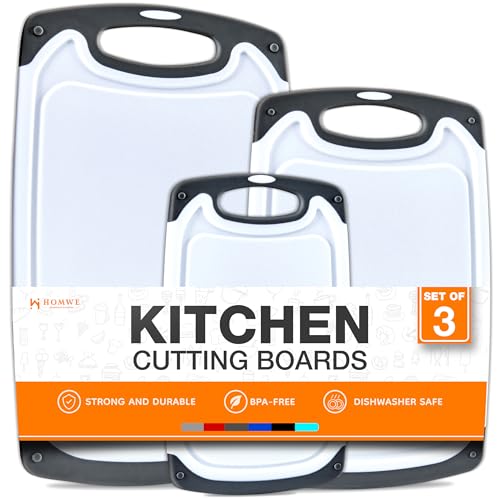
What is a plastic board?
The practical choice for raw meat, because it can be sanitised properly. Retire it when knife scoring gets deep enough to trap food.
Grain direction is the whole story with wooden boards. Wood is a bundle of long fibres, and whether the knife meets the ends of those fibres or their sides decides how much the edge is abraded and how visible the knife marks are.
What it does to a knife edge
Scoring 3 out of 5 here, this is an acceptable everyday surface that will dull an edge somewhat faster than end grain wood, and not enough to worry about with ordinary Western steel.
The comparison that matters: a hard surface abrades the edge with every stroke, and a few minutes of cutting on glass or stone undoes a full sharpening session. Wood and plastic both give slightly, which is why they are the only two materials worth cutting on.
Upkeep and hygiene
Maintenance: low. dishwasher safe, which is its real advantage. The dishwasher is the real advantage here, because it means the board can be properly sanitised, which is why plastic is the right choice for raw meat and fish. Retire it when knife scoring gets deep enough to trap food.
Cutting boards
- thetchry
THETCHRY Plastic Cutting Board Set of 3-Cutting Boards for Kitchen BPA Free
$9.99 Check pricePrices change often - GORILLA GRIP
GORILLA GRIP BPA-Free Reversible Kitchen Cutting Board, Set of 3, Black
$21.99 Check pricePrices change often - OXO
OXO Good Grips 2-Piece Plastic Cutting Board Set - Double-Sided
2 pieces$27.95 Check pricePrices change often


Common questions
Are plastic boards good for knives?
They score 3 out of 5 for edge friendliness. The practical choice for raw meat, because it can be sanitised properly. Retire it when knife scoring gets deep enough to trap food. For everyday kitchen use this is a reasonable choice, and the difference between the better wood options is smaller than the difference between any wood and a hard surface.
How do I look after a plastic board?
Low. Dishwasher safe, which is its real advantage. Run it through the dishwasher regularly, which is the whole point of owning one, and replace it once knife scoring is deep enough to hold food after washing.
Does board material affect food safety?
Both wood and plastic are accepted food-contact surfaces when they are cleaned properly. The practical difference is that plastic can be sanitised in a dishwasher and wood cannot, which is why the standard advice is to keep a separate plastic board for raw meat and fish and use wood for everything else.
What size board should I buy?
At least four inches longer than the blade you use on it, so an 8 inch chef knife wants twelve inches or more. Eighteen by twelve inches is the size most home cooks settle on. Cramped board space slows cutting and makes it less safe, and more board area improves daily work more than a better knife does.
Why does my board warp?
Because wood takes up and gives off moisture, and it does so unevenly if only one face is exposed. Drying a board flat on a counter traps moisture underneath, so it dries on top and swells below. Stand it on edge to dry, oil both faces equally, and choose a thicker board if warping is a recurring problem.