Best Japanese chef knives
Quick answer
The best all-around Japanese chef knife is the Shun Classic 8 Inch at $140.14, built with VG-MAX steel around 60 to 61 HRC, thin enough to feel sharper than German cutlery while staying practical for daily home use.

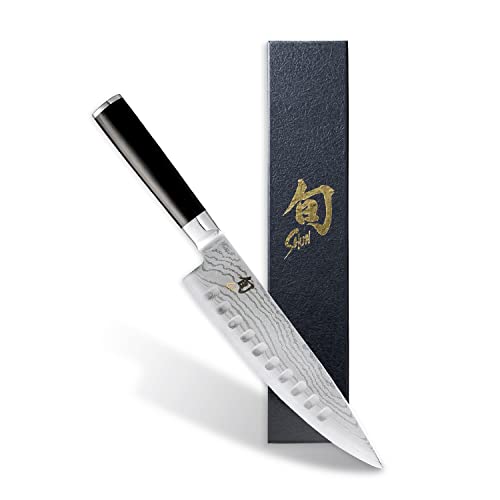
Shun Classic 8" Chef's Knife
8 inThe Shun Classic 8 Inch balances everything a Japanese chef knife is supposed to deliver: VG-MAX steel around 60 to 61 HRC that holds a keen edge far longer than German steel, and a thinner double-bevel grind, typically 10 to 16 degrees per side, that cuts with noticeably less resistance. At $140.14 it is the clearest entry point into genuine Japanese performance without stepping up to powder steel and its stricter care requirements.
The three tiers
Beginner: Best entry point
someone moving up from a German or Swiss chef knife who wants to feel the difference Japanese steel and geometry make- Beginner pick
Miyabi Koh 8-inch Chef's Knife, Stainless Steel
8 in$134.95 Check pricePrices change often
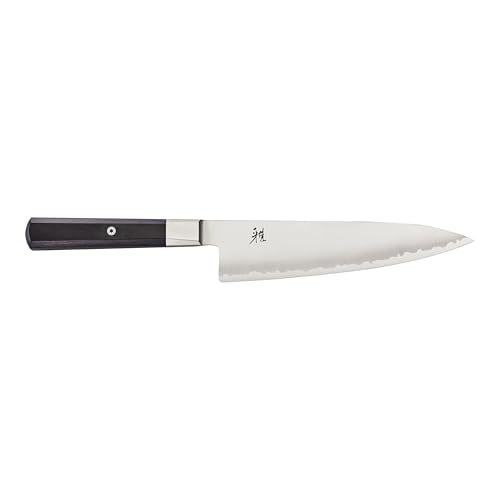
The Miyabi Koh 8 Inch is priced at $134.95 and gives a first real taste of a Japanese-profile gyuto: a thinner blade, a lighter feel in hand, and the kind of fine control that German knives are not ground for. Because this specific line's exact steel composition is not confidently confirmed here, judge it on its category rather than a specific hardness claim: Japanese double-bevel knives generally run harder and thinner than German ones, which is exactly what a first Japanese knife should demonstrate.
Not for: someone who wants a fully documented steel specification to plan sharpening intervals around, since that detail is not confirmed for this specific line
Intermediate: Best all-around
a home cook ready to commit to a knife that needs a whetstone eventually, in exchange for real edge retention gainsThe Shun Classic 8 Inch is the single most recognized name in accessible Japanese cutlery, and for good reason. Its VG-MAX steel runs about 60 to 61 HRC, a real step up from the 55 to 58 HRC range of most German knives, and it is ground thin enough, in the 10 to 16 degree per side range typical of Japanese double bevels, to feel dramatically sharper cutting through produce. It is harder than German steel, so it chips more easily against bone or a hard board, and a steel honing rod does little for it; plan on an occasional whetstone touch-up instead.
Not for: anyone who wants to keep using only a honing rod for maintenance, since VG-MAX at this hardness needs a whetstone, not a rod
Expert: Performance ceiling
an experienced cook who already owns a whetstone and wants the longest edge retention available in this lineup
The Miyabi Birchwood SG2 8 Inch uses SG2 powder steel, which typically runs about 63 to 64 HRC, near the top of what any kitchen knife reaches. That hardness holds an extremely fine edge through far more cutting than VG-MAX or German steel, but state plainly: it chips rather than rolls if it twists against bone or a hard surface, and only a whetstone brings it back. At $299.95, this is a knife for someone who already sharpens their own knives and wants the ceiling, not someone hoping a harder steel will fix technique.
Not for: anyone who cuts near bone regularly, anyone without a whetstone, and anyone who would be genuinely upset by a chipped edge on a $300 knife
| Knife | Price | Steel | Hardness |
|---|---|---|---|
| Miyabi Koh 8 Inch | $134.95 | Japanese stainless (not independently confirmed) | Harder than typical German steel |
| Shun Classic 8 Inch | $140.14 | VG-MAX | 60 to 61 HRC |
| Miyabi Birchwood SG2 8 Inch | $299.95 | SG2 powder steel | 63 to 64 HRC |
What makes a knife Japanese versus German in the first place
The distinction is really about two design choices: steel hardness and grind geometry, more than country of manufacture. Japanese cutlery culture generally favors harder steels, often in the 60 to 64 HRC range, ground to a thinner double-bevel edge around 10 to 16 degrees per side. German cutlery generally favors softer, tougher steel around 56 to 58 HRC ground to a sturdier 14 to 20 degree edge. Neither approach is wrong; they represent a genuine tradeoff between edge retention and durability.
A harder, thinner Japanese edge cuts with less resistance and stays sharp through more use, but it is also more likely to chip on hard contact and needs a whetstone rather than a honing rod to recover. A softer, thicker German edge dulls, in the sense of rolling, sooner, but a few seconds on a honing rod brings it right back, and it shrugs off far more abuse.
What is VG-MAX and why does it matter for the Shun Classic
VG-MAX is a stainless steel alloy that Shun uses across its Classic line, and it typically reaches a hardness around 60 to 61 HRC. That places it solidly above German knife steel and below the powder steels like SG2 found in premium lines. In practice, that means a Shun Classic holds a working edge for noticeably longer than a Victorinox or Wusthof between sharpenings, while still being less brittle and easier to live with than a full powder-steel knife.
- German steel like X50CrMoV15: about 56 to 58 HRC, forgiving, honing rod works well
- VG-MAX as used in Shun Classic: about 60 to 61 HRC, sharper for longer, needs a whetstone eventually
- Powder steel like SG2 or R2: about 63 to 64 HRC, longest edge retention, most brittle, whetstone only
Is SG2 powder steel worth the jump from VG-MAX
It is worth it specifically for someone whose edge dulls fast enough that resharpening frequency is a real annoyance, and who already owns a whetstone and the patience to use it. The jump from VG-MAX at around 60 to 61 HRC to SG2 at around 63 to 64 HRC buys meaningfully longer edge retention, but the knife becomes more brittle in the process and a honing rod becomes essentially useless for maintenance. For most home cooks, the Shun Classic is the better stopping point.
How should I care for a Japanese chef knife differently than a German one
Skip the honing rod as a primary maintenance tool once you own a Japanese knife with steel above about 60 HRC; a rod is built to realign a rolled edge, and this harder steel does not roll the same way, it chips at a microscopic level instead. A whetstone, used every few weeks to few months depending on use, is the correct tool. Also handle the knife more carefully around bone, frozen food, and glass or stone cutting boards, since the same hardness that keeps the edge keen also makes it less forgiving of hard contact.
Should a beginner start with a Japanese chef knife at all
It is a reasonable choice if you are willing to learn proper handling from day one, but many beginners are better served starting on a softer, more forgiving German or Swiss knife like the Victorinox Fibrox Pro, then moving to a Japanese knife like the Shun Classic once basic knife skills and careful handling habits are established. There is no harm in starting with a Japanese knife directly; it simply asks for more careful use sooner.
Why does a Japanese knife feel lighter in the hand than a German knife of the same length
Weight comes from both the thickness of the blade stock and the handle material, and Japanese knives typically use thinner blade stock ground to a narrower edge angle, which removes material compared to a thicker German blade of the same length. Many Japanese knife handles are also made from lighter woods or resins rather than the heavier synthetic materials common on German handles. The combined effect is a knife that feels noticeably lighter and more nimble in the hand, which some cooks prefer for long prep sessions and others find takes adjustment after years of using a heavier knife.
This lighter feel is part of why Japanese knives are often described as an extension of the hand rather than a tool doing work through weight and momentum. Cutting technique shifts slightly as a result: rather than letting the knife's weight do the work on a rocking chop, a Japanese knife rewards a more controlled, precise stroke, which is worth practicing deliberately rather than assuming the technique transfers automatically from a heavier German knife.
How we chose
This guide is researched from published manufacturer specifications and steel data along with owner reports, not in-person evaluation. Steel type and grind angle are the two facts that most reliably predict how a Japanese knife will behave day to day, and both are generally documented by the manufacturer or well established for a given product line, such as Shun's use of VG-MAX across its Classic range.
Where a specific line's steel composition or hardness is not confidently confirmed, this guide describes the category and general Japanese knife behavior rather than asserting a specific number for that product, so every hardness claim you read here is tied to a line we could verify.
Buying tips
Do I need a whetstone before I buy a Japanese chef knife
You do not need one on day one, but plan to get one within the first year of ownership. Japanese steels like VG-MAX and SG2 run harder than German steel, which means a honing rod does very little to restore a dulling edge; the edge needs to be sharpened, not just realigned. A basic combination whetstone costs far less than the knife itself and is the correct tool for this steel.
Why do Japanese knives feel sharper than German knives right out of the box
It comes down to grind angle as much as steel. Japanese double-bevel knives are typically ground about 10 to 16 degrees per side, compared to roughly 14 to 20 degrees for German knives. That thinner edge meets less resistance moving through food, which is why a Japanese knife feels like it is barely touching a tomato while a German knife of similar sharpness feels like it is working slightly harder.
Will a Japanese chef knife chip if I use it like my old German knife
It might, and this is the most important adjustment to make. Harder Japanese steels are more brittle than German steel, so twisting the blade, prying with the tip, or cutting through bone or frozen food is far more likely to chip the edge than it would with a softer German knife. Treat a Japanese knife with more care around hard contact, and it will reward you with an edge that lasts noticeably longer between sharpenings.
Is a cutting board choice more important with a Japanese knife
Yes. Glass, stone, and ceramic boards will dull any edge almost immediately, but the effect is more costly on a Japanese knife because that keen edge is the entire reason you bought it. Pair any knife in this guide with a wood or quality plastic board, and the edge will last meaningfully longer between whetstone sessions. A wood board is generally the gentler surface of the two and is worth the extra care it requires, such as regular oiling, for anyone who has invested in a genuinely sharp Japanese knife.
Other options worth knowing about
- MIYABI
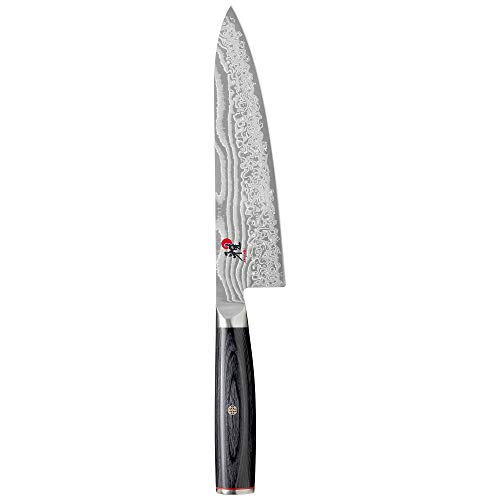
Miyabi Evolution Chef's Knife, 8", Stainless Steel
8 in$139.95 Check pricePrices change often - MIYABI
Miyabi Kaizen II 8-inch Chef's Knife, Stainless Steel
8 in$169.95 Check pricePrices change often


Common questions
What is the best Japanese chef knife for most home cooks
The Shun Classic 8 Inch at $140.14. Its VG-MAX steel runs about 60 to 61 HRC, giving a real edge-retention upgrade over German cutlery, and its thinner double-bevel grind delivers the sharper cutting feel Japanese knives are known for, all without the extra brittleness of a full powder-steel blade.
Do Japanese chef knives need to be sharpened differently than German ones
Yes. Japanese knives with steel around 60 HRC or above respond poorly to honing rods, which mainly realign a rolled edge rather than remove metal. These knives need a whetstone for real maintenance. German knives around 56 to 58 HRC respond well to a honing rod for most day-to-day upkeep.
Why do Japanese knives chip more easily than German knives
Harder steel is more brittle by nature. Japanese knives typically run 60 to 64 HRC compared to about 56 to 58 HRC for German steel, and that added hardness holds a keener edge but sacrifices some flexibility, so a hard contact with bone or a glass board is more likely to chip the edge rather than just dull it.
Is SG2 steel better than VG-MAX
SG2, at roughly 63 to 64 HRC, holds an edge longer than VG-MAX at roughly 60 to 61 HRC, but it is also more brittle and needs the same whetstone-only maintenance, just less frequently. Whether it is better depends on whether you value that extra edge retention enough to accept a more fragile blade.
Can I use a pull-through sharpener on a Japanese chef knife
It is a poor match for steel above about 61 HRC, which describes most genuine Japanese chef knives. A pull-through sharpener is built for softer steel and can damage a hard, thin Japanese edge. A whetstone is the correct tool for these knives.
Is a Japanese chef knife a good gift for someone new to cooking
It can be, but pair it with a basic whetstone and a short explanation of care instead of a honing rod, which is far less useful on this steel. Without that context, a new cook may treat a hard Japanese edge like a forgiving German one and chip it early through hard contact or the wrong cutting board.