Best stockpots
Quick answer
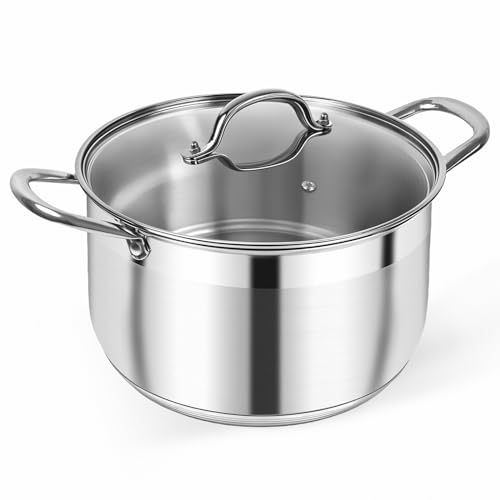
The Cuisinart 766-24 Chef's Classic 8-Quart Stockpot ($49.99) is the best all-around pick: 8 quarts comfortably covers the four-quarts-of-water-per-pound pasta rule for a two pound batch, and it comes from a long-running, widely documented cookware line.

Cuisinart 766-24 Chef's Classic 8-Quart Stockpot with Cover, Stainless Steel
8 qtEight quarts is the size most home cooks actually need: it covers the standard four-quarts-of-water-per-pound pasta rule for a full two pound batch with headroom to prevent boilover, and it is large enough for a real batch of stock or soup without becoming too heavy to lift full. The Cuisinart 766-24 is part of a long-established cookware line with widely available replacement lids and a strong track record in owner reports.
The three tiers
Beginner: Best first pot
someone who needs one large pot for pasta and soup without paying for extras like a strainer insert
The Amazon Basics Stainless Steel Induction Compatible Stock Pot with Glass Lid is $30.44 and covers the core job of a stockpot: 8 quarts of capacity, which handles the four-quarts-of-water-per-pound pasta rule for a two pound batch, plus large soup or stock batches. It is listed as induction compatible and oven safe, and the glass lid lets you check a simmering pot of stock or a rolling boil of pasta water without lifting the lid and losing heat.
Not for: someone who cooks pasta multiple times a week and wants a built-in strainer insert to avoid handling a heavy pot of boiling water at the sink
Intermediate: Best value
a cook who makes stock, soup and pasta regularly and wants a durable pot from an established cookware brand- Intermediate pick
Cuisinart 766-24 Chef's Classic 8-Quart Stockpot with Cover, Stainless Steel
8 qt$49.99 Check pricePrices change often
The Cuisinart 766-24 Chef's Classic 8-Quart Stockpot with Cover is $49.99 and belongs to a long-running stainless steel line with widely documented specs and easy-to-find replacement lids. Eight quarts is the volume most recipes assume when they say a large stockpot, comfortably fitting a two pound batch of pasta under the four-quarts-per-pound rule, or several quarts of homemade stock simmered from bones and vegetables for hours.
Not for: someone who regularly cooks pasta for a crowd and would benefit from a built-in strainer basket rather than draining a full 8 quart pot into a colander at the sink
Expert: Performance ceiling
a cook who regularly makes large batches of pasta or stock for a crowd and wants a strainer insert built into the set- Expert pick
Cooks Standard 12 Quart Pasta Pot Set 4-Piece 18/10 (304) Stainless Steel
12 qt · 4 pieces$109.99 Check pricePrices change often

The Cooks Standard 12 Quart Pasta Pot Set is $109.99 and includes a 4-piece 18/10 stainless steel setup with a strainer insert, which lets pasta be lifted straight out of the boiling water without carrying a full, heavy pot to the sink to drain. Twelve quarts covers a three pound batch of pasta under the four-quarts-per-pound rule, well past what an 8 quart pot can safely hold, and 18/10 stainless is a higher nickel content than basic 18/0 stainless, which owner reports commonly associate with better corrosion resistance over years of acidic tomato sauce use.
Not for: a cook or small household that rarely makes more than a pound of pasta at a time, since 12 quarts of capacity and a strainer insert add real storage footprint and cost that go unused at smaller batch sizes
| Product | Price | Capacity | Includes strainer |
|---|---|---|---|
| Amazon Basics Stainless Steel Stock Pot | $30.44 | 8 qt | No |
| Cuisinart 766-24 Chef’s Classic Stockpot | $49.99 | 8 qt | No |
| Cook N Home 12 Quart Pasta Pot with Strainer Lid | $99.39 | 12 qt | Yes, strainer lid |
| Cooks Standard 12 Quart Pasta Pot Set, 4-Piece | $109.99 | 12 qt | Yes, strainer insert |
How much pasta water do I actually need in a stockpot?
The widely cited rule of thumb is four quarts of water for every pound of dry pasta. That ratio gives the pasta enough room to move freely as it cooks, which keeps individual pieces from clumping together into a sticky mass and keeps the starch that releases from the pasta diluted enough that it does not turn the water into paste.
In practice, the pot needs to be larger than the water volume alone, since a full-to-the-brim pot of water will boil over the moment pasta and its starch are added. A one pound batch calling for four quarts really needs at least a 6 quart pot, and a two pound batch calling for eight quarts is comfortably matched to an 8 quart pot, which is why 8 quarts is the most common recommended stockpot size for regular pasta cooking.
Is a bigger stockpot always better?
Not for most households. A 12 quart or larger stockpot takes up significantly more cabinet or shelf space than an 8 quart pot, and it is heavier and more awkward to lift, carry and wash even when only partially full, since a wide, tall pot with a small amount of liquid in it is harder to tip and pour than one sized closer to the actual volume being cooked.
The right size depends on typical batch size, not maximum possible batch size. A household that cooks a pound of pasta or a modest pot of soup most weeks is usually better served by an 8 quart pot used often than a 12 quart pot that sits mostly empty and takes up more storage space than it earns.
What is the difference between a stockpot and a dutch oven?
A stockpot is taller and narrower relative to its capacity, which suits boiling large volumes of water or simmering stock for hours with minimal evaporation from a smaller surface area exposed to air. A dutch oven is shorter and wider with thicker cast walls, built more for braising, searing and oven use than for boiling large volumes of liquid.
Stockpots are typically made from thinner stainless steel since their main job, boiling water, does not require the heat retention of thick cast iron. A dutch oven's thick walls, by contrast, are exactly what helps it hold steady, even heat through a long braise, which is a different cooking method than what a stockpot is optimized for.
Can I make stock in a stockpot without a strainer insert?
Yes, a plain stockpot without a built-in strainer works fine for making stock; the bones, vegetables and aromatics are simply strained out afterward using a separate colander, fine mesh strainer, or cheesecloth over a large bowl once the stock is done simmering. A strainer insert is a convenience feature, not a requirement, and many experienced home cooks make stock in a plain pot for years without one.
Where a strainer insert becomes genuinely useful is with foods you want to remove cleanly partway through cooking, like pasta or blanched vegetables, rather than at the very end like stock. For stock specifically, the insert mostly saves the step of setting up a separate strainer and bowl once the pot comes off the heat.
The tradeoff for a pasta pot set with a strainer insert is storage space, since the insert itself takes up cabinet room even when it is not in use, and a large 12 quart pot with an insert is bulkier to store than a plain stockpot of the same capacity.
How we chose
This guide is researched from published manufacturer specifications, listed capacities and materials, and patterns across verified owner reviews, not from hands-on cooking or side-by-side testing on a stovetop. Where a listing states induction compatibility, a stainless grade like 18/10, or a specific quart capacity, that published detail is what is cited.
Capacity was matched against the standard four-quarts-of-water-per-pound pasta rule as the main sizing benchmark, since it is the single most common practical use for a stockpot. Whether a set included a strainer insert, the stainless grade used, and documented induction compatibility were weighed as secondary factors within each price tier.
Buying tips
What size stockpot do I actually need?
Use the four-quarts-of-water-per-pound pasta rule as a baseline: a one pound box of pasta needs at least 4 quarts of water, but a pot exactly that size leaves no room and will boil over, so 6 quarts is really the practical minimum for a single pound. An 8 quart pot comfortably handles a two pound batch with room to spare and doubles as a stock or soup pot for a full recipe of bones, vegetables and water. Households that regularly cook for a crowd, or that make large batches of stock to freeze, are better served by a 12 quart pot from the start rather than upgrading later.
Is a strainer insert worth paying extra for?
A strainer insert lets pasta, blanched vegetables or boiled potatoes be lifted straight out of the pot and drained over the sink without lifting and tipping a full, heavy pot of boiling water, which is both more convenient and safer. The tradeoff is cost and storage space, since a pasta pot set with an insert is priced and sized noticeably above a plain stockpot of the same capacity. For anyone who cooks pasta only occasionally, a plain stockpot and a standard colander accomplish the same result for less money and less cabinet space.
What does 18/10 stainless steel mean, and does it matter for a stockpot?
The numbers refer to the percentage of chromium and nickel in the stainless steel alloy; 18/10 has a higher nickel content than the more basic 18/0 grade used in some budget cookware. Nickel adds corrosion resistance and a slightly warmer shine, which matters over years of simmering acidic tomato sauces or stock in the same pot. It is a real but incremental difference rather than something that changes day-to-day cooking performance, and 18/0 stainless is still perfectly functional for most home use.
Do I need a stockpot to be induction compatible?
Only if your range is actually induction. Induction cooktops require a magnetic base to generate heat, so an induction-compatible stockpot needs magnetic stainless steel in its base construction, not aluminum or copper alone. If you cook on gas or standard electric coils, induction compatibility is not something you need to shop for, though it does not hurt to have since an induction-compatible pot still works fine on gas or electric.
Glass or metal lid, does it matter on a stockpot?
A glass lid lets you watch a pot come to a boil or check a simmering batch of stock without lifting the lid, which reduces the heat and steam lost every time a lid is removed and replaced. A stainless steel lid is generally more durable against a hard knock and does not carry the same risk of cracking if dropped or exposed to a sudden temperature change, though it means checking on the pot requires lifting the lid. For a pot that spends long hours simmering stock, a metal lid is a reasonable, more durable choice; for pasta or anything where watching the water for a boil matters, glass is the more convenient option.
Other options worth knowing about
- Kirecoo
Kirecoo 8 Quart Stainless Steel Induction Stock Pot with Visible Lid
8 qt$28.99 Check pricePrices change often - AVACRAFT
AVACRAFT 7 Quart 18/10 Stainless Steel 4 Piece Pasta Pot Set
7 qt · 4 pieces$74.00 Check pricePrices change often - Cook N Home
Cook N Home 12 Quart Stainless Steel Pasta Pot with Strainer Insert 3-in-1
12 qt$99.39 Check pricePrices change often - Cuisinart
Cuisinart 4-Piece Cookware Set, 12 Quarts, Chef's Classic Stainless Steel Pasta/Steamer, 77-412P1
4 pieces$119.95 Check pricePrices change often


Common questions
What size stockpot is best for making stock?
An 8 quart stockpot is a practical size for a standard batch of stock made from a chicken carcass or a few pounds of bones plus vegetables and enough water to cover, and it fits comfortably on most burners. Cooks who regularly make large batches to freeze often prefer a 12 quart pot instead, since stock reduces somewhat during a long simmer and a bigger starting volume yields more finished stock per batch.
Can a stockpot go in the oven?
Many stainless steel stockpots are oven safe, but the specific temperature limit depends on the handle material and any plastic or silicone components on the lid, so it is worth checking the published oven-safe rating for a specific model rather than assuming. Most stockpot cooking happens entirely on the stovetop, so oven safety is a secondary feature for most buyers rather than a primary requirement.
Is stainless steel or aluminum better for a stockpot?
Stainless steel is more common for stockpots because it resists corrosion from acidic ingredients like tomatoes and holds up well to years of use without reacting with food. Aluminum conducts heat faster and is lighter, but uncoated aluminum can react with acidic foods and discolor over time, which is why most stockpots use a stainless steel interior, sometimes with an aluminum core sandwiched in the base for faster heating.
Do I need a lid for a stockpot?
A lid speeds up bringing a large volume of water to a boil significantly by trapping heat and steam instead of letting it escape into the room, which matters most with a big 8 to 12 quart pot of water. Once pasta or other food is added, many cooks remove the lid to control boilover and reduce starchy foam, so a lid mainly earns its keep in the initial heating stage.
What does 18/8 or 18/10 stainless steel mean on a stockpot listing?
Both numbers describe the chromium and nickel content of the stainless steel alloy used, with the first number being chromium percentage and the second nickel percentage. Higher nickel content, as in 18/10, generally means better corrosion resistance and a slightly shinier finish over years of use, though 18/8 and even basic 18/0 stainless are still fully functional for typical home cooking.