Best baking dishes
Quick answer
The Pyrex Deep 3-Pack Glass Baking Dish Set ($48.42) is the best all-around pick, giving 9x13, 7x11 and 8x8 inch sizes in one purchase, with Pyrex publishing a 425 degree F oven-safe limit for its glass with no broiler and no stovetop use.
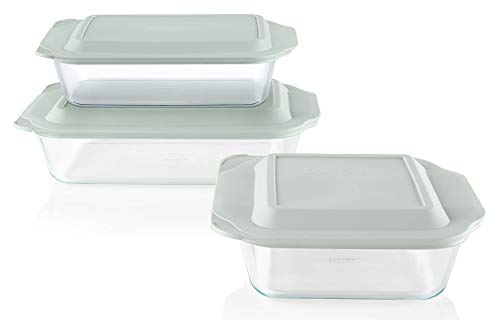
Pyrex Deep 3-Pack Glass Baking Dish Set (9"x13", 7"x11", 8"x8")
13 inMost casserole and lasagna recipes assume a 9x13 dish, but plenty of everyday baking calls for a smaller 8x8 or a mid-size 7x11, and the Pyrex Deep 3-Pack covers all three sizes for $48.42 rather than buying each individually. Pyrex publishes a 425 degree F oven-safe rating for its glass bakeware, with the caveat that glass should never go under a broiler or directly on a stovetop burner, since it is not built to tolerate that kind of direct, concentrated heat.
The three tiers
Beginner: Best first pot
someone stocking a first kitchen who wants a versatile set of dishes for casseroles, roasting and reheating leftovers
The Amazon Basics Glass Baking Dishes with BPA-Free Lids is a 6-piece bakeware set for $24.29, built from borosilicate glass, the same category of glass most established brands use for oven-safe bakeware. Getting multiple dish sizes with fitted, BPA-free storage lids in one set is a practical way to cover casseroles, side dishes and leftover storage without buying pieces one at a time.
Not for: someone who wants a single large, heavy-duty 9x13 dish specifically for lasagna or a big casserole, since a multi-piece starter set spreads the value across several smaller dishes rather than one dedicated large one
Intermediate: Best value
a cook who wants a large, single ceramic dish that goes straight from oven to table for serving
The DOWAN 9x13 Ceramic Baking Dish is $26.99 and holds 4.2 quarts, sized for a full lasagna or large casserole recipe. Ceramic stoneware retains heat well once hot, which keeps a casserole warmer at the table longer than a thin metal pan would, and its finished look means it can go straight from the oven to the table for serving without needing to be transferred to a separate serving dish.
Not for: anyone who moves dishes quickly between very different temperatures, such as straight from a refrigerator into a hot oven, since ceramic and stoneware are more prone to cracking from thermal shock than tempered glass or metal
Expert: Performance ceiling
a cook who wants a complete, trusted range of dish sizes from a long-established glass bakeware brand- Expert pick
Pyrex Deep 3-Pack Glass Baking Dish Set (9"x13", 7"x11", 8"x8")
13 in$48.42 Check pricePrices change often
The Pyrex Deep 3-Pack Glass Baking Dish Set is $48.42 and includes 9x13, 7x11 and 8x8 inch dishes, covering the size range most baking and casserole recipes call for in one purchase from a brand with decades of published, consistent oven-safe specifications. Pyrex explicitly rates its glass bakeware to 425 degrees F, with no broiler and no stovetop use, which is a clear, well-documented limit compared to some off-brand glass bakeware with less specific published guidance.
Not for: someone who needs to broil a dish or move it from a cold refrigerator directly into a very hot oven, since glass bakeware, including Pyrex, is not rated for broiler use and is more prone to thermal shock cracking than metal
| Product | Price | Size | Oven safe |
|---|---|---|---|
| Amazon Basics Glass Baking Dishes, 6-Piece Set | $24.29 | Multiple sizes | 425F (glass, no broiler) |
| DOWAN 9x13 Ceramic Baking Dish, 4.2 Qt | $26.99 | 9x13 in | Oven safe, check thermal shock limits |
| DOWAN 9x13-inch Deep Ceramic Baking Dish | $32.39 | 13 in (9x13) | Oven safe, check thermal shock limits |
| Pyrex Deep 3-Pack Glass Baking Dish Set | $48.42 | 9x13, 7x11, 8x8 in | 425F (glass, no broiler, no stovetop) |
Can I use a glass baking dish under the broiler?
No. Pyrex and most other glass bakeware manufacturers explicitly warn against broiler use, since a broiler produces intense, direct radiant heat concentrated much closer to the food than a standard bake setting, and glass is more prone to cracking or even shattering under that kind of direct, uneven heat exposure than metal is.
If a recipe calls for a final broil to brown a cheese topping or crisp breadcrumbs, the safer approach with a glass dish is to bake fully first, then transfer the finished dish's contents to an oven-safe metal pan for the brief broiling step, or use a metal baking dish from the start if broiling is a planned part of the recipe.
Why does my casserole dish need to cool on a trivet instead of the counter?
A dish coming straight out of a hot oven is at or near the oven's temperature, often 350 to 425 degrees F, and a countertop, especially stone, tile or a cold surface near a sink, is typically at room temperature or cooler. Setting a very hot glass or ceramic dish directly onto that much cooler surface creates a sharp, localized temperature difference across the bottom of the dish, which is exactly the kind of thermal shock that cracks glass and ceramic bakeware.
A trivet, wooden cutting board, or folded kitchen towel insulates the dish from that sudden temperature drop, giving it a gentler transition as it cools. This single habit prevents a large share of the cracked-dish complaints that show up in owner reviews of both glass and ceramic bakeware.
Is stoneware or glass better for keeping a casserole warm at the table?
Stoneware and ceramic dishes generally hold heat longer than glass once removed from the oven, because their denser material stores more thermal energy and releases it more slowly, which keeps a casserole or side dish warmer for longer during a meal. This is one of the practical reasons ceramic bakeware is popular for dishes meant to be served directly from the dish at the table rather than transferred to a separate serving bowl.
Glass cools somewhat faster but offers the advantage of being able to see the bottom of the dish to check browning without lifting food out, which stoneware and ceramic do not allow since they are opaque. Neither material is strictly better across every use case; the choice depends on whether checking browning or holding table heat matters more for a given recipe.
Do I need a lid for my baking dish?
A lid, or a tight cover of foil, matters most for recipes that need to retain moisture during baking, such as a covered casserole that would otherwise dry out, or for storing and reheating leftovers directly in the same dish they were baked in. A dish sold with a fitted, BPA-free plastic lid is convenient for storage but that lid is generally not oven safe and needs to be removed before the dish goes into the oven, with foil substituted if the recipe needs to be covered while baking.
For dishes that will regularly be baked, stored, and reheated in the same container, a set that includes storage lids saves the step of transferring food to a separate storage container after cooking, which is one of the practical advantages of a multi-piece set that pairs each dish with a matching lid.
How we chose
This guide is researched from published manufacturer specifications, listed materials and oven-safe temperature ratings, and patterns across verified owner reviews, not from hands-on baking or side-by-side oven testing. Where a brand publishes a maximum oven-safe temperature, a specific quart capacity, or a broiler restriction, that published detail is what is cited here.
Material tradeoffs (glass versus ceramic versus stoneware) were weighted heavily, since they directly affect what a dish can safely be used for, including whether it can handle a broiler, a stovetop, or rapid temperature changes. Included dish sizes, whether lids were provided, and documented oven-safe ratings were weighed as secondary factors within each price tier.
Buying tips
What is the actual oven-safe temperature for a glass baking dish?
Pyrex, one of the most established glass bakeware brands, publishes a 425 degree F maximum oven-safe temperature for its glass dishes, with clear guidance that its glass bakeware should never go under a broiler or be placed directly on a stovetop burner. This limit exists because glass, even tempered borosilicate glass, does not tolerate the very high, direct or uneven heat a broiler element or a stovetop flame produces the way metal does. Always check the specific published rating for a given glass dish rather than assuming every brand matches Pyrex's number exactly, since ratings can vary between manufacturers and even between product lines from the same brand.
Why did my ceramic or glass baking dish crack?
The most common cause is thermal shock, a sudden and extreme temperature change, such as taking a dish straight from the refrigerator or freezer and placing it directly into a fully preheated hot oven, or setting a hot dish down on a cold, wet countertop straight from the oven. Both ceramic stoneware and glass bakeware are more vulnerable to this than metal pans, since metal expands and contracts more evenly and quickly without building up the internal stress that cracks glass and ceramic. Letting a cold dish sit at room temperature for a while before it goes into a hot oven, and letting a hot dish cool on a trivet rather than a cold surface, both reduce this risk significantly.
9x13, 8x8 or a smaller dish, what size do I actually need?
A 9x13 inch dish is the standard size assumed by most casserole, lasagna and bar cookie recipes, and it is the single most useful size to own first if buying only one dish. An 8x8 inch dish is the common size for smaller batches, like a half recipe of brownies or a side dish portion for two to four people, and a 7x11 inch dish falls in between, useful for recipes that would be too shallow or crowded in an 8x8 but do not need the full volume of a 9x13. Buying a set that covers multiple sizes, rather than one large dish, tends to get more consistent use across different recipe sizes.
Glass, ceramic or metal, which is best for a baking dish?
Glass bakeware heats more slowly and evenly than metal and lets you see browning on the bottom of a casserole without lifting it, but it has a firm published oven-safe ceiling (425 degrees F for Pyrex) and cannot go under a broiler. Ceramic and stoneware dishes retain heat exceptionally well once hot, which keeps food warm at the table longer, and many owners prefer their finished look for serving directly, but they are the most vulnerable of the three to cracking from thermal shock. Metal bakeware heats fastest and tolerates the widest range of oven temperatures, including broiling in many cases, but it lacks the at-the-table presentation of glass or ceramic and can react with very acidic dishes if uncoated.
What is the difference between a casserole dish and a baking dish?
In most kitchen contexts the two terms are used interchangeably to describe an oven-safe dish with raised sides used for casseroles, gratins, roasted vegetables and baked desserts like cobblers. Some listings use casserole dish specifically for a deeper, often rounder vessel, sometimes sold with a lid for the same reason a dutch oven has one, while baking dish more often describes a rectangular pan like a 9x13. In practice, checking the specific dimensions and depth of a listing matters more than the name used to describe it.
Other options worth knowing about
- MALACASA
MALACASA 4.4QT Ceramic Casserole Dishes for Oven, 9x13 Baking Dishes, White
4.4 qt$24.28 Check pricePrices change often - Anchor Hocking
Anchor Hocking Glass Baking Dishes for Oven, 2 Piece Set (2 Qt & 3 Qt Glass Casserole Dishes)
3 qt · 2 pieces$25.99 Check pricePrices change often - M MCIRCO
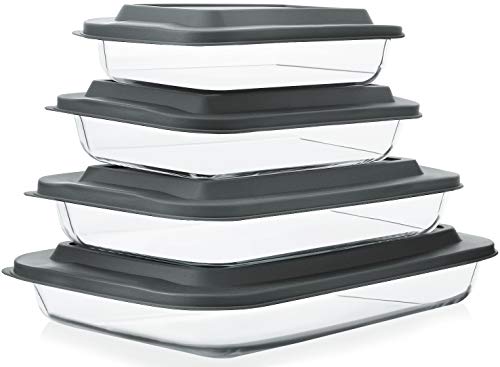
M MCIRCO 8 Piece Deep Glass Baking Dish with Lids, BPA free,Gray
8 pieces$35.99 Check pricePrices change often


Safety
Common questions
What temperature can a Pyrex glass baking dish handle?
Pyrex publishes a 425 degree F maximum oven-safe temperature for its glass bakeware. Pyrex also specifically states that its glass dishes should not be used under a broiler or placed directly on a stovetop burner, since those methods apply more direct and uneven heat than a standard oven setting, which glass is not built to tolerate.
Why did my glass baking dish shatter in the oven?
Shattering is almost always caused by thermal shock, a sudden and extreme temperature change, such as adding cold liquid to a hot dish, placing a cold dish straight from the refrigerator into a fully preheated oven, or setting a very hot dish onto a cold or wet surface. Following the manufacturer's temperature limit and avoiding sudden temperature swings largely prevents this.
Is ceramic or glass better for a lasagna dish?
Both work well for lasagna. Ceramic holds heat longer after baking, keeping the lasagna warmer at the table, and often has a more finished look for serving directly. Glass lets you see the bottom layer to check for browning without lifting the lasagna, and it is generally less expensive at the same 9x13 size. Neither material changes how the lasagna itself bakes in any significant way.
Can I put a hot baking dish in the refrigerator?
It is safer to let a hot glass or ceramic dish cool to close to room temperature before refrigerating it, rather than moving it directly from a hot oven into a cold refrigerator. That sudden temperature drop is a form of thermal shock and can crack the dish, even though the risk is often lower than the reverse scenario of a cold dish going into a hot oven.
What size baking dish equals a 9x13 pan?
A standard 9x13 inch baking dish holds approximately 3 quarts, though some deeper 9x13 dishes hold closer to 4 quarts. If substituting a different size, matching total volume rather than just the length and width measurements gives a more reliable result, since a deeper, smaller-footprint dish can hold a similar volume to a shallower 9x13 pan.
Is stoneware safe for high oven temperatures?
Most stoneware baking dishes are rated for standard oven baking temperatures, commonly up to 450 to 500 degrees F depending on the manufacturer, but stoneware is particularly vulnerable to cracking from thermal shock rather than from sustained high heat itself. Checking the specific manufacturer's published temperature rating, and avoiding sudden temperature changes, matters more with stoneware than with most other bakeware materials.